
Glass manufacturing has always relied on a delicate balance of raw materials, silica sand, soda ash, limestone, and various additives, melted at extremely high temperatures to create the clear, durable material we use every day. But what if a single mineral could improve that entire process while also reducing waste, cutting emissions, and lowering energy bills? That’s exactly what GlassoMite does.
What is GlassoMite Slag?
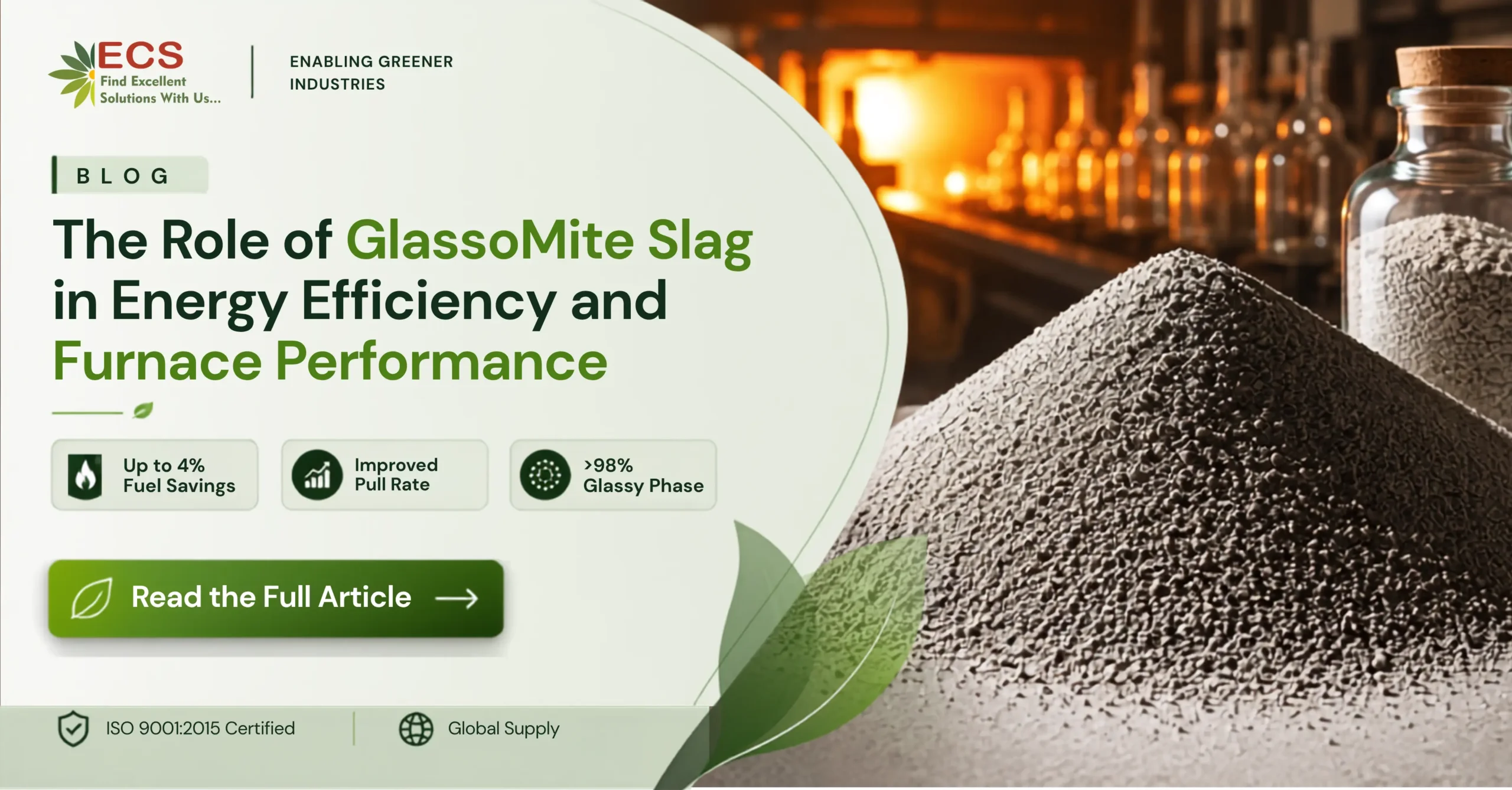
GlassoMite Slag is an eco-friendly, alumina rich mineral solution designed for use across all types of soda lime silica glass production.
Origin
- Derived from granulated blast furnace slag
- This slag is a by product generated during steel manufacturing
Purpose
- Repurposes an industrial by product into a valuable raw material for glass furnaces
- Turns what was once considered waste into a high performance input
Structure
What makes GlassoMite Slag particularly effective is its homogenous, glassy structure.
- It is already in a pre reacted, glass like form
- This means it behaves very differently from traditional raw materials like limestone or dolomite
- Limestone and dolomite need to undergo energy intensive chemical breakdown inside the furnace before they can contribute to the glass melt
The Chemical Profile
GlassoMite Slag’s composition is what gives it its performance edge. A typical analysis shows it contains:
Major Components
- Around 32% silica (SiO₂)
- Nearly 19.5% alumina (Al₂O₃)
- Close to 11% calcium oxide (CaO)
Minor Components
- Smaller amounts of magnesium oxide, sodium oxide, potassium oxide, and titanium oxide
- Trace levels of sulphur and carbon
- The sulphur present in GlassoMite is in the form of Sulphide Sulphur (S⁻), which plays a key role during melting. It interacts with sodium sulphate in the batch, lowering its decomposition temperature and enabling more effective refining at reduced energy levels, resulting in fewer seeds and blisters in the final glass.
Why This Matters
- This particular blend of oxides means GlassoMite Slag can supply many of the same components that glassmakers would otherwise need to source from separate raw materials
- It does so in a form that is far easier for the furnace to process
- GlassoMite Slag is also finely graded, with a significant portion passing through fine micron sieves, helping it integrate smoothly into the batch mix
The Role of GlassoMite Slag in Glass Production
GlassoMite Slag plays a dual role in the glassmaking process:
As a Source of Glassmaking Oxides
- Particularly contributes calcium oxide
- Contributes roughly 15% to 40% of the CaO required in the final glass composition
- Reduces a furnace’s dependence on conventional sources like limestone and dolomite
- Limestone and dolomite release CO₂ during decomposition
As a Redox Balancing Agent
- Contains trace amounts of carbon and sulphur in sulphide form
- This gives it mild reducing properties
- Unlike stronger reducing agents that have to be added carefully in tiny quantities, GlassoMite Slag’s gentler redox behaviour allows it to be used in larger amounts
- This ensures uniform distribution and consistent results across the batch
Where and How Much is GlassoMite Slag Used?
GlassoMite Slag is suitable for all major categories of soda lime silica glass, though the exact dosage depends on:
- The type and colour of glass being produced
- The raw materials locally available to the manufacturer
Typical Usage Levels
Usage is calculated as a percentage of the dry silica sand weight in the batch:
- Clear container glass: typically 6% to 7%
- Amber container glass: 18% to 22% (the highest usage range)
- Green container glass: typically 10% to 13%
- Float glass: ranges more broadly, from 3% to 8%
A Versatile Solution
- This flexibility across glass types is one of the reasons GlassoMite Slag has found adoption among progressive glass manufacturers across different markets
- It isn’t a niche additive for one specific product line
- It is a versatile input that can be tuned to a plant’s specific needs
Why GlassoMite Slag Matters for Modern Glass Manufacturers
The glass industry, like many heavy manufacturing sectors, faces mounting pressure to:
- Reduce energy consumption and emissions
- Maintain or improve product quality and output
Furnaces run at extremely high temperatures around the clock, and even small improvements in melting efficiency can translate into significant savings at scale, both financially and environmentally.
How GlassoMite Slag Addresses This Need
- Because of its glassy, pre reacted nature, it behaves similarly to recycled glass cullet inside the furnace
- It participates in batch reactions at lower temperatures, meaning the furnace doesn’t need to work as hard to achieve the same melt quality
- Because it is sourced from a steel industry by product, using it supports circular economy principles, giving a second life to material that would otherwise be discarded
In short, GlassoMite represents a shift in how the glass industry can think about raw materials: not just as inputs to be sourced and consumed, but as opportunities to integrate sustainability directly into core production processes, without compromising on the quality of the final product.
Looking Ahead
In the second part of this series, we’ll dive deeper into:
- How GlassoMite Slag works at a chemical and process level
- The measurable benefits it delivers, from energy savings to emissions reduction to improved glass quality
- How Eco Clay Solutions partners with manufacturers to implement GlassoMite Slag through a structured, trial based approach
For manufacturers exploring ways to improve furnace efficiency, reduce emissions, and lower operating costs simultaneously, GlassoMite Slag offers a compelling starting point, backed by real chemical and operational data.
To learn more about GlassoMite Slag and how it can be integrated into your glass production process, visit ecoclaysolutions.com/glassomite or get in touch with the Eco Clay Solutions team.